When you buy through links on our articles, Future and its syndication partners may earn a commission.

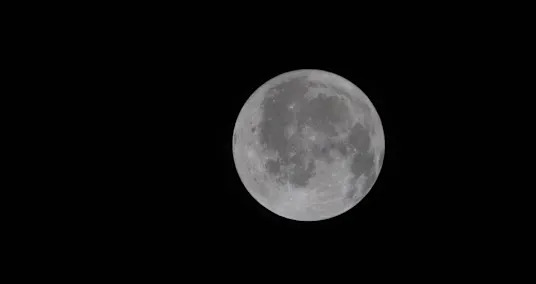
Look to the southern sky after dark on Dec. 26 to spot the waxing crescent moon shining near the gas giant Saturn among the stars of the constellation Pisces.
The 48%-lit moon will appear roughly halfway up the southern sky in the hours following sunset. Saturn will show up as a brilliant star less than four degrees to the lower left of the lunar disk. For scale, your three middle fingers held at arm's length span about five degrees of sky.
A pair of 10x50 binoculars should easily fit both Saturn and the moon within the same field of view, while revealing an assortment of fascinating surface features on Earth's natural satellite, which will appear almost half-lit just one day shy of its first quarter phase on Dec. 27.

Celestron NexStar 8SE

If you're looking to gaze at the planets, we reckon the Celestron NexStar 8SE is the best motorized telescope out there as it's great for astrophotography, deep-space observing and it offers stunning detailed imagery. It is a little pricey but for what you get, it's good value. For a more detailed look, you can check out our Celestron NexStar 8SE review.
Look to the upper region of the lunar crescent to find the menacing form of the Aristotles crater with its eastern rim bathed in impenetrable shadow. The Eudoxus crater is visible just beneath and beyond the dark expanses of Mare Serenitatis (the Sea of Serenity) and Mare Tranquilitatis (the Sea of Tranquility), which served as the landing site of the historic Apollo 11 lunar landing.

A telescope with a 6-inch (152 millimeter) aperture will begin to reveal the razor-thin profile of Saturn's rings, as they rest oriented edge-on to Earth following the gas giant's ring plane crossing in March. Astronomy filters can also aid in revealing details in Saturn's upper atmosphere, which appears divided into distinct multi-colored cloud bands that circle the gas giant at 1,600 feet (500 meters) per second.
Want to get a closer look at the diverse menagerie of worlds populating our solar system? Then be sure to browse our picks of the best telescopes for exploring the night sky, along with our guides to picking the best cameras and lenses for astrophotography, if you want to immortalize your stargazing sessions.
Editor's Note: If you capture an image of the moon with Saturn and want to share it with Space.com's readers, then please send your photo(s), comments, and your name and location to [email protected].
LATEST POSTS
- 1
 Hamas hands over another body in the Gaza Strip
 - 2Munich Security Conference chief defends inviting AfD lawmakers
- 3Sound and Delightful: 12 Nutritious Smoothie Recipes
- 4'Fertiliser costs mean I'm better off not planting'
- 5Portugal among EU countries with the most people working close to 50 hours a week




- Daily Briefing: A bad flu season gets worse
- Cameroon says Russia has confirmed 16 Cameroonian soldiers died in Ukraine
- New electric car registrations rise sharply in Germany in March
- France honors the victims of the Paris attacks' night of terror 10 years on
- Step by step instructions to Safeguard Your Teeth During Sports Exercises
- Artemis II astronauts will see parts of the moon no human has before. Here’s how
- New science points to 4 distinct types of autism
- German diesel hits new records over Easter weekend
- Smooth out Your Funds: Cash The board Simplified